How can we make computer science more accessible through creativity? And how can we help children understand the mathematics behind artificial intelligence, rather than simply using it as a black box?
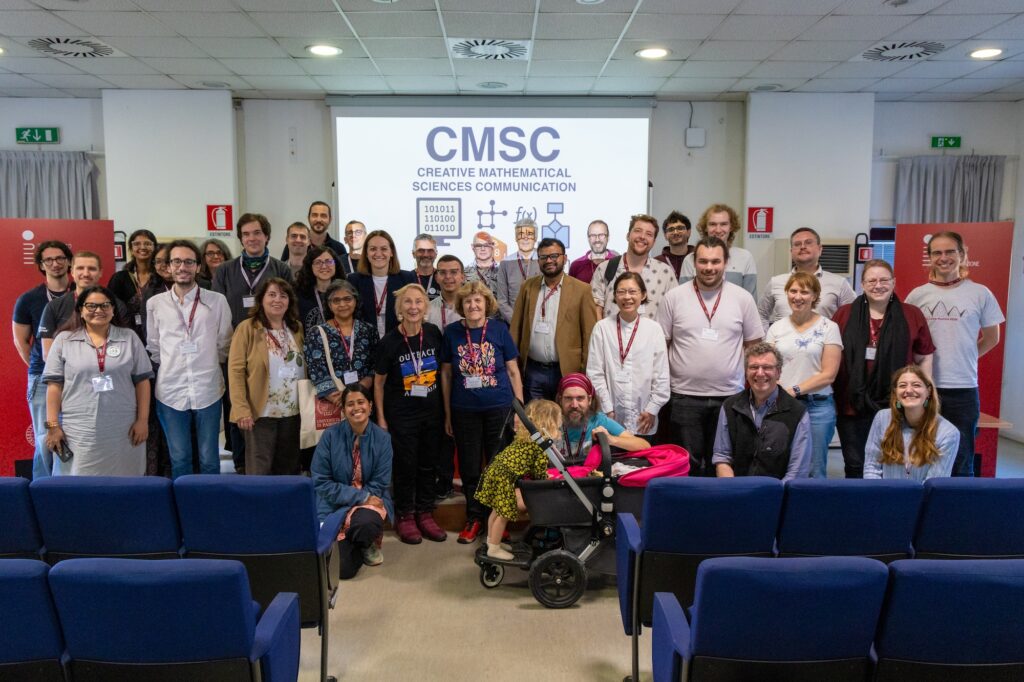
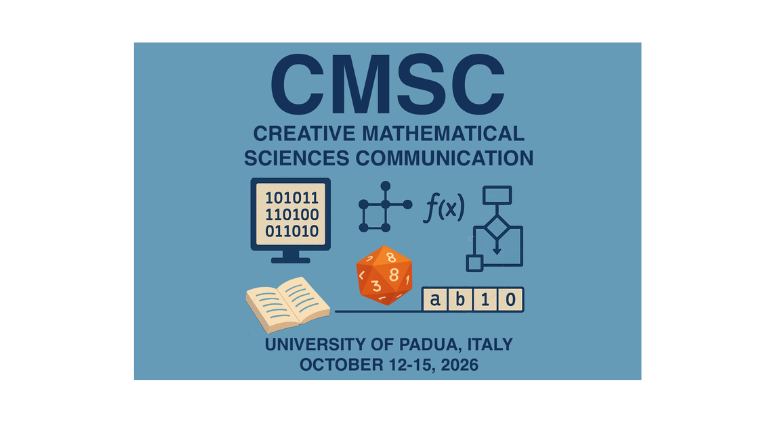
These questions were at the heart of the two papers I presented at Creative Mathematical Sciences Communication (CMSC 2026), the 8th international conference dedicated to innovative ways of communicating mathematics and computer science, held in Padova from October 12th to 15th.
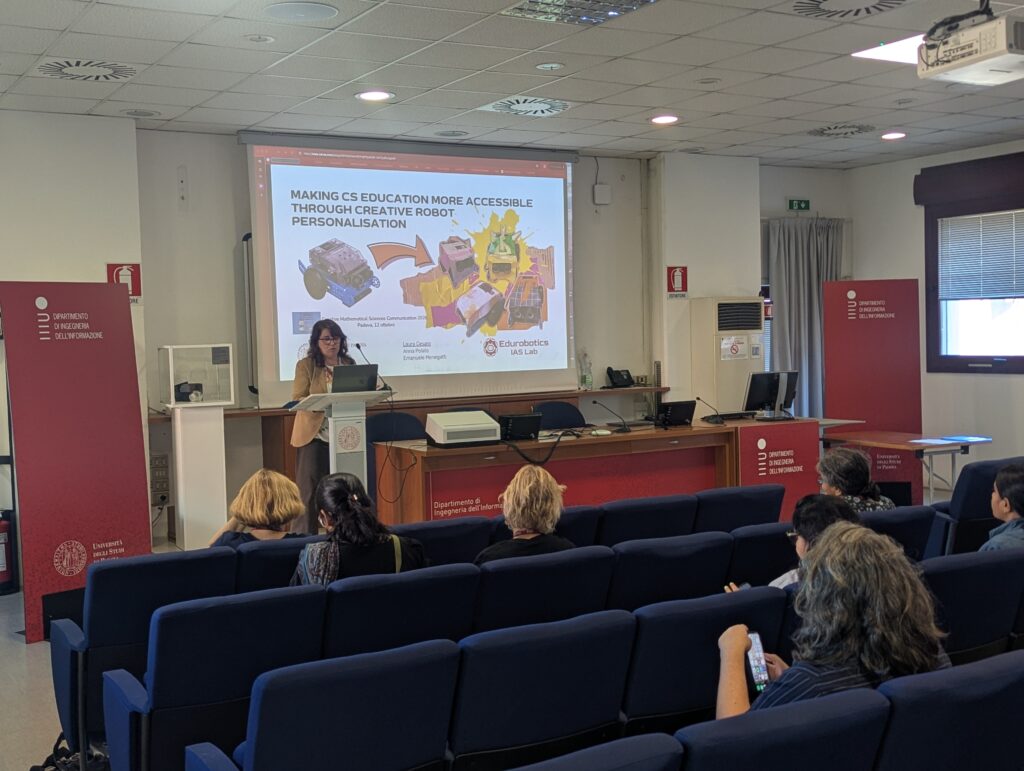
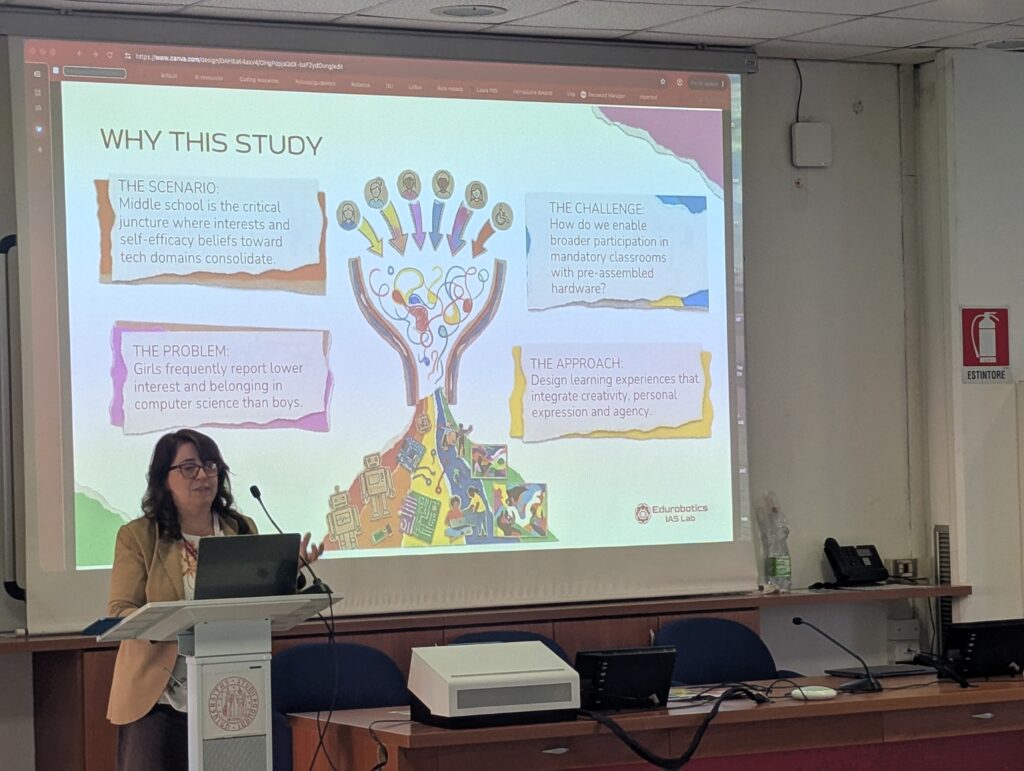
The first contribution, “Making CS Education More Accessible Through Creative Robot Personalisation”, co-authored with Anna Polato and Emanuele Menegatti, explored how allowing students to personalise their robots can create opportunities for creative expression and support more inclusive approaches to computer science education. By moving beyond the technical aspects of programming, robot personalisation offers students different ways to engage with technology and make the learning experience their own.
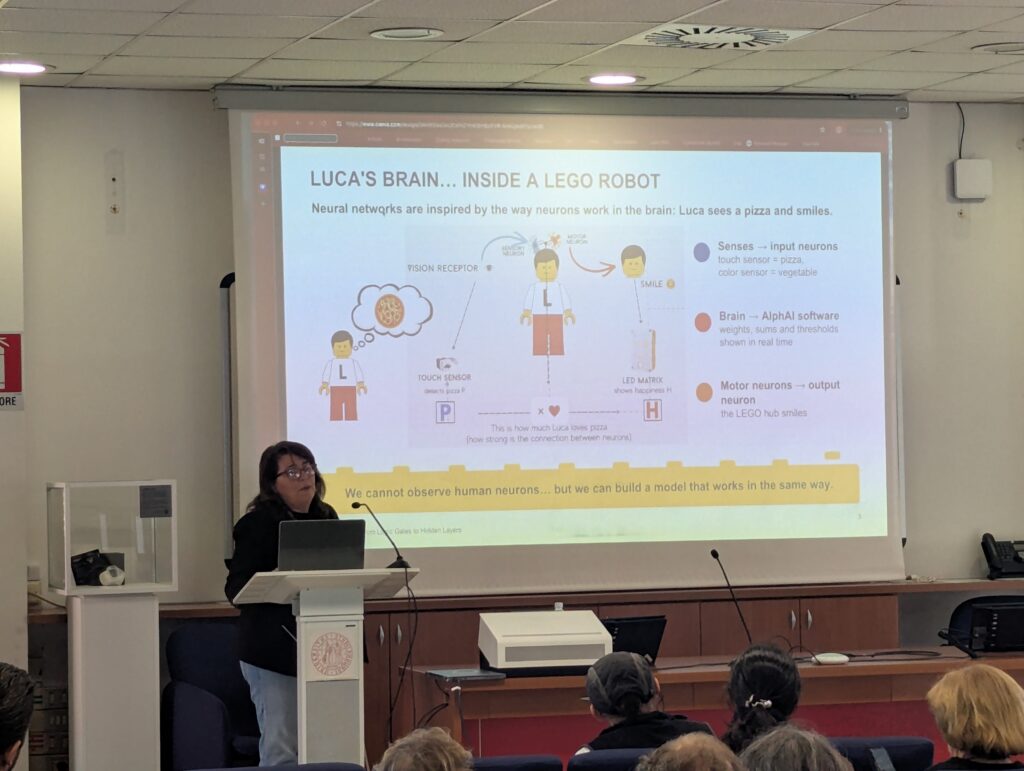
The second paper, “From Logic Gates to Hidden Layers: A Hands-on Introduction to Neural Networks for Young Learners”, co-authored with Amy Eguchi, Amber Jones, Emanuele Menegatti, and Thomas Deneux, was developed during my research period at Université Paris-Saclay with Learning Robots team. The study investigated whether children aged 10–11 could understand the mathematical principles behind artificial neural networks through hands-on activities combining the AlphAI platform and LEGO robotics.
Starting from simple logical operations and gradually introducing weights, thresholds, and hidden layers, students explored how individual artificial neurons work together to produce different behaviours. Through a sequence of activities built around seven characters, they could directly manipulate network parameters and observe their effects on a robot, making the mathematics behind AI visible and accessible.
The two contributions addressed different but connected challenges: making computer science more inclusive through creativity and personalisation, and opening the black box of AI by allowing children to explore the mathematics behind neural networks.
Both reflect a central idea guiding my research: technology becomes a meaningful educational tool when students are given opportunities not only to use it, but also to understand, question, and shape it.