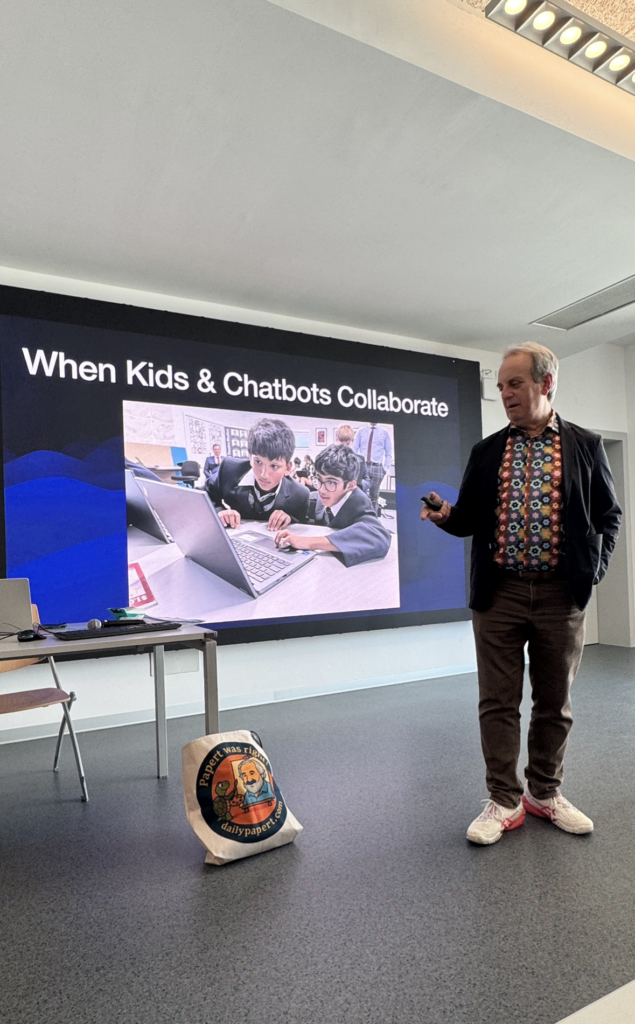
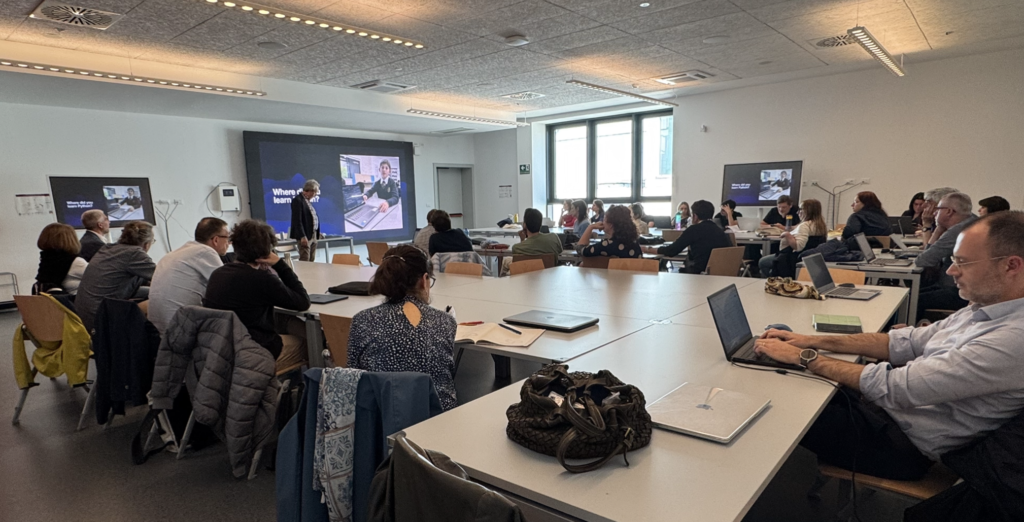
One year after his first visit, Gary Stager, internationally renowned advocate of constructionism and long-time collaborator of Seymour Papert, was back in Padua for a new afternoon of training dedicated to teachers: the workshop “Il futuro è computazionale“ (“The future is computational”), organized and hosted at the Engineering Hub of the Department of Information Engineering (DEI), as part of the University of Padua’s Third Mission activities.
What if we could transform the way students learn, create, and think?
That was the question running through the whole session. Building on the reflections from last year’s event, this edition pushed further into a very current territory: how artificial intelligence can lower the barriers of complex programming syntax, making computational creation genuinely accessible to students (and teachers) of every age and background.
The heart of the workshop was a hands-on exploration of AI tools used not to replace human thinking, but to amplify it. Gary Stager guided the participating teachers through concrete strategies for redesigning the learning environment, opening up possibilities that would have seemed out of reach only a short time ago: creative coding made approachable, ideas turned into working projects without getting stuck on syntax, and more time left for the thinking that matters.
It’s a natural evolution of the constructionist philosophy he brought to Padua in 2025 — learners who “do to understand” and “invent to learn” — now enriched by tools that make that hands-on approach even more inclusive.
As the day’s closing message put it: this isn’t just about preparing students for the future, but about helping them build it.
Once again, the event confirmed itself as a valuable meeting point between academic research and everyday teaching practice, bringing together educators from Veneto region and beyond to experiment together with new ways of teaching and learning. I was glad to contribute to the organization of this second edition, continuing the work started last year with the same speaker and the same spirit: education that is experimental, student-centered, and always looking ahead.